The third day of the CADIS Leadership Conference deepened the conversation on disaster risk reduction and management (DRRM) by examining how synodal dialogue, community capacity, and mental health support intersect to build enduring resilience. Building on earlier sessions on community-based DRRM models, Day 3 focused on shifting reactive emergency responses into structured, inclusive, human-centered strategies.
Core Objectives of Day 3
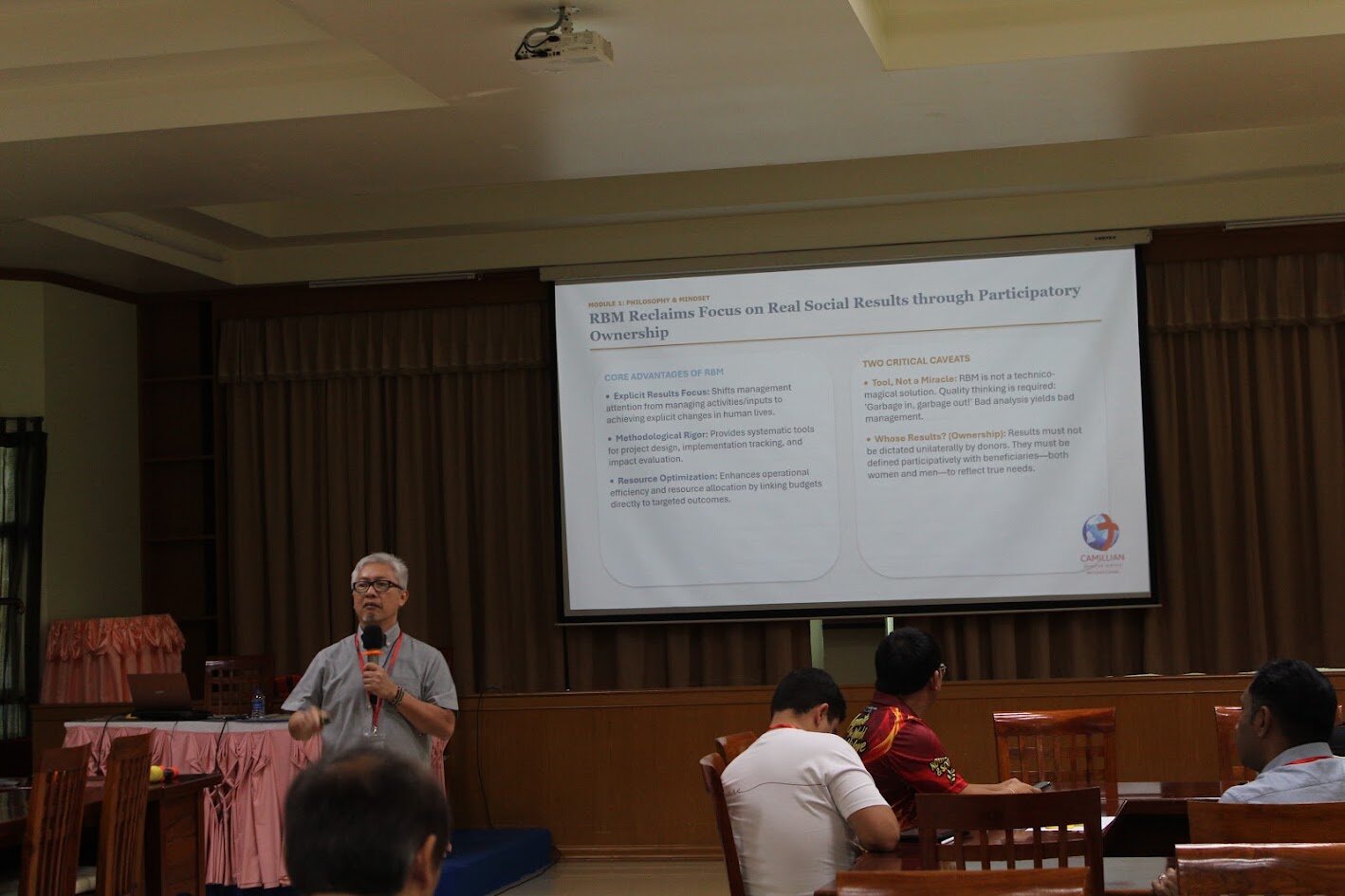
The third day, facilitated by Fr. Dan Vincente Cancino, Camillian from the Philippines, set out four primary objectives to guide participants toward actionable outcomes:
- Foster Synodal Engagements and Listening: Utilize synodal listening processes among conference participants as a process to strengthen local community capacity.
- Evaluate Community Capacity: Explore the importance of community capacity and its direct impact on long-term resilience and sustainability.
- Integrate Mental Health Approaches: Share Community-Based Mental Health and Psychosocial Support (CBMHPSS) approaches within disaster management frameworks.
- Develop Actionable Pathways: Translate synodal dialogue into concrete, measurable initiatives tailored to local community needs.
Expanding the Synodality & Discernment Framework in DRRM
A central focus of the morning presentation was bridging technical execution with human-centered community capacity. Traditional DRRM often relies strictly on technical components such as engineering, logistical systems, data maps, and safety codes. However, speakers emphasized that true resilience requires The Synodal Bridge—an approach grounded in inclusivity, shared discernment, and the co-ownership of risk.
By establishing this bridge, technical solutions connect directly with human capacity, which encompasses trust networks, local knowledge, mental health, and emotional resilience.
The Circle of Discernment
To operationalize synodal listening in disaster management, Fr. Dan highlighted the Circle of Discernment, a three-phase methodology for community consultation:
- Clarifying Phase — Listening to the Margin: The circle explicitly elevates the perspectives of those who stand to lose the most during a crisis.
- Integrative Phase — Resonance & Friction Elimination: This process shifts the focus away from competing individual demands toward identifying shared structural needs.
- Co-Responsible Action Phase — Consensus Building: The circle co-creates an execution strategy that blends technical parameters with human dignity.
Four Dimensions of Community Capacity
Discussion emphasized that capacity is the combination of all strengths, attributes, and resources available within a community used to achieve stated goals. To transform a community from a state of systemic vulnerability to enduring resilience, DRRM must move beyond a purely reactive stance through structural capacity building across four core dimensions:
- Human & Cognitive Capacity: Focuses on skills, situational awareness, and indigenous memory. A key success indicator occurs when communities self-evacuate accurately before official orders arrive, preventing widespread panic or paralysis.
- Social & Relational Capacity: Built on mutual trust, peer networks, and social capital. Success is shown when vulnerable demographics are actively sought out and protected by neighbors, preventing resource hoarding and civil unrest.
- Institutional & Operational Capacity: Focuses on decentralized governance, standard operating procedures (SOPs), and continuity. Success occurs when sub-neighborhood units execute relief plans autonomously if cut off, avoiding command paralysis and administrative bottlenecks.
- Material & Financial Capacity: Encompasses hard infrastructure, asset pools, and diverse incomes. Success is marked by functional supply lines and residents avoiding predatory debt cycles, preventing economic collapse.
The Three Tiers of Social Capital
In examining the Social & Relational dimension, speakers described social capital as the "invisible mortar holding a community together," categorizing it into three vital tiers:
- Bonding Capital: Intra-neighborhood systems built on horizontal trust among peers.
- Bridging Capital: Inter-neighborhood systems and cross-community alliances for resource pooling.
- Linking Capital: Vertical ties connecting community groups to formal authorities and institutional resources.
Community-Based Mental Health (CBMHPSS) & The BPSS Model
Fr. Dan highlighted Community-Based Mental Health (CBMH) as a model of care that integrates mental health promotion, prevention, and treatment directly within community settings, rather than relying solely on hospital-based services. It engages families, groups, and communities as central actors in well-being, recovery, and resilience.
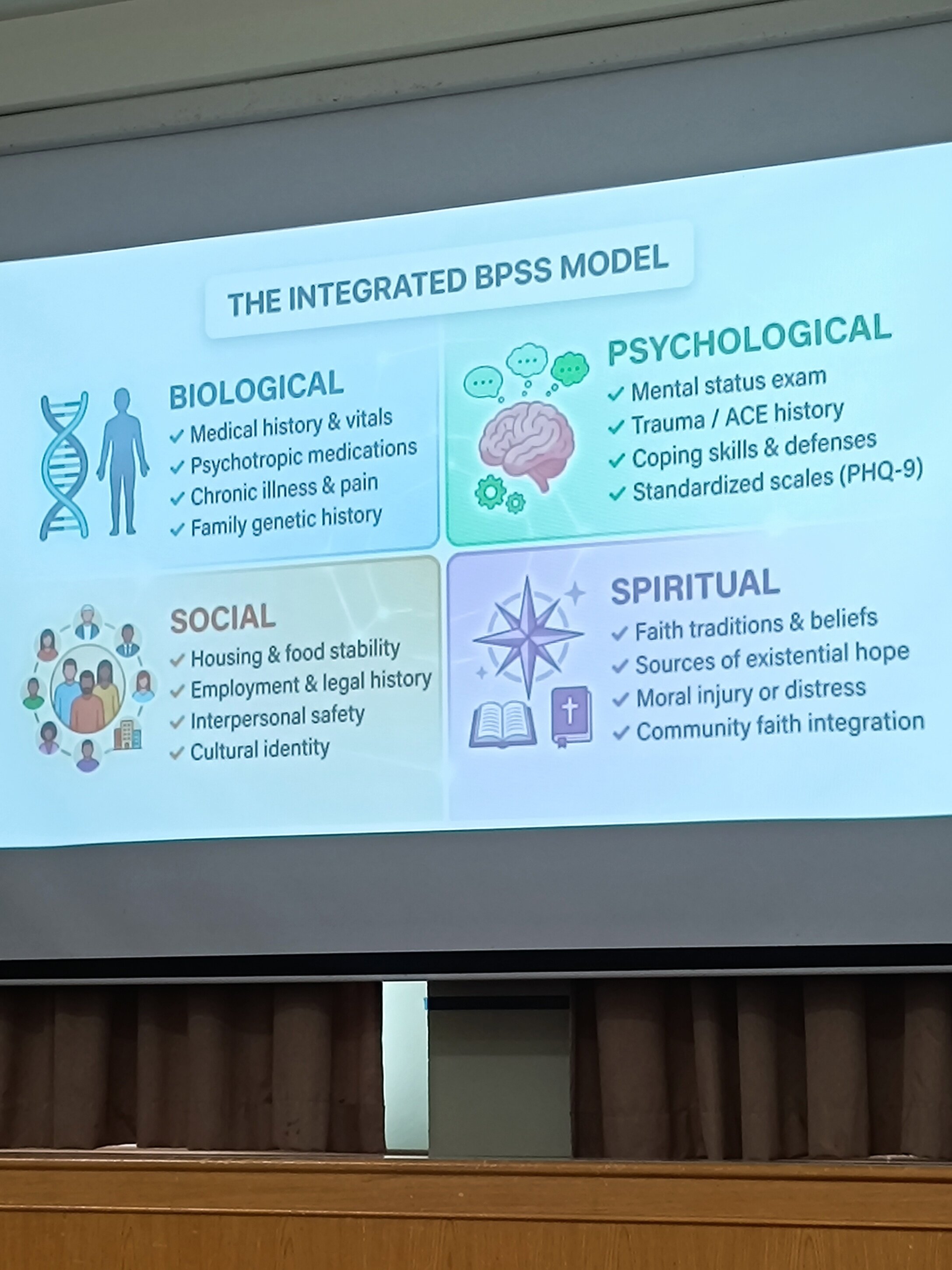
Participants explored The Integrated Bio-Psycho-Social-Spiritual (BPSS) Model, which broadens standard care to address four key areas:
- Biological: Medical history, vitals, psychotropic medications, chronic illness, pain, and family genetic history.
- Psychological: Mental status exams, trauma/ACE history, coping skills, defenses, and standardized scales like PHQ-9.
- Social: Housing and food stability, employment, legal history, interpersonal safety, and cultural identity.
- Spiritual: Faith traditions, beliefs, sources of existential hope, moral injury or distress, and community faith integration.
By adopting this model, CBMH efforts gain sociological depth because mental health is understood not merely as an individual clinical state, but as a socially embedded and co-created process shaped by relationships, community participation, and collective well-being.
Mental Health Models: The Dual Continuum
Fr. Dan also introduced the Dual Continuum Model of mental health, which demonstrates that mental illness and mental health exist on distinct axes:
- Horizontal Axis: Ranges from serious mental illness to no mental illness.
- Vertical Axis: Ranges from poor mental health (languishing/surviving) to good mental health (flourishing/thriving).
This model highlights that an individual living with a mental illness can still flourish and thrive if supported by strong social and spiritual community systems. Conversely, an individual without a diagnosed mental illness can still languish or survive with poor mental health if isolated or unsupported.
Operationalizing CBMHPSS Across DRRM Pillars
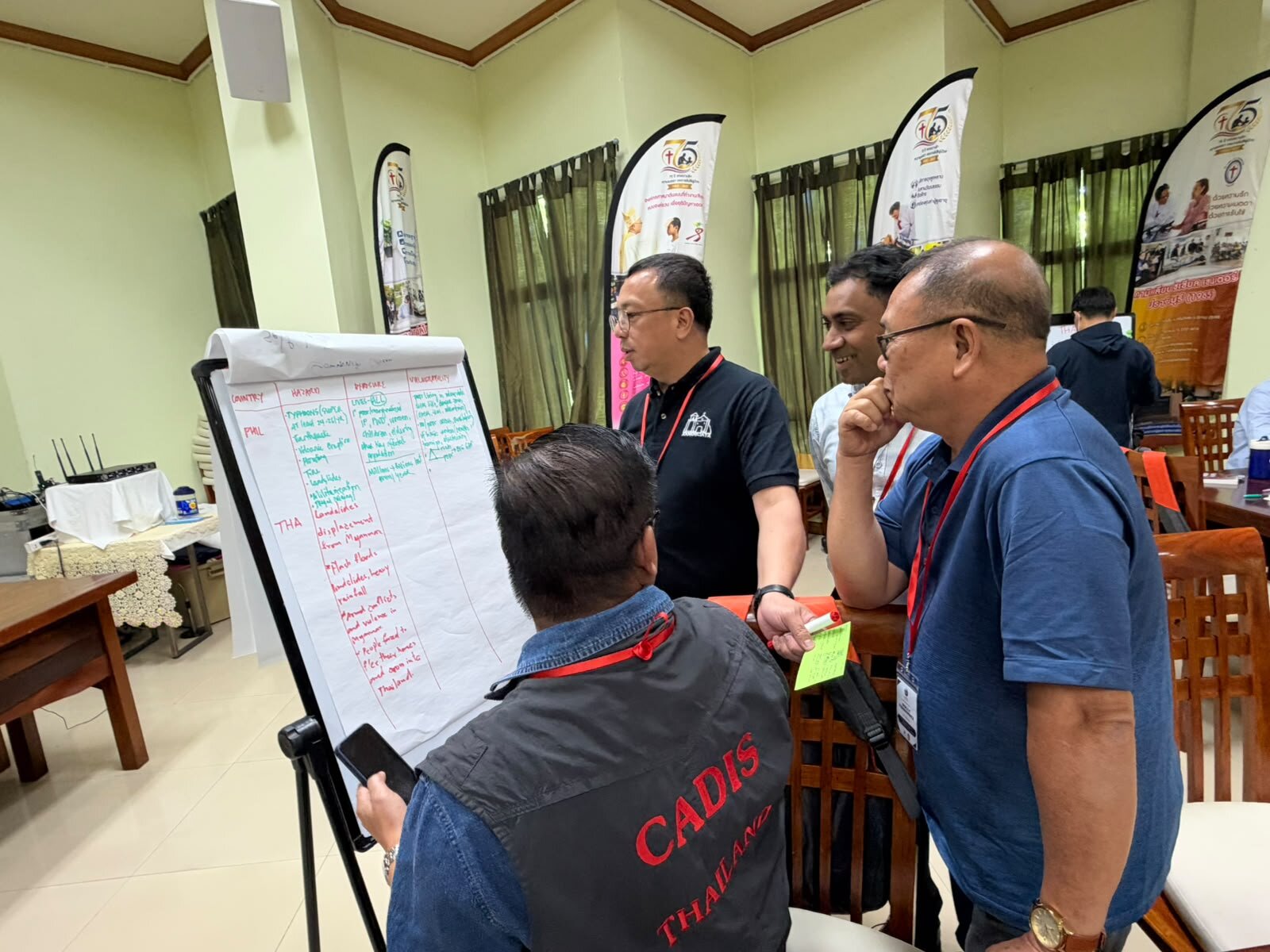
To conclude the day's sessions, participants mapped specific CBMHPSS activities across the core pillars of Disaster Risk Reduction and Management:
- Prevention & Preparedness: Focuses on building local capacity through Psychological First Aid (PFA) training, creating early-warning community communication lines, reducing stigma, and mapping out vulnerable segments of the population.
- Response: Involves deploying immediate non-specialized support, distributing psychological aid alongside physical triage, establishing secure spaces for families, and organizing peer-to-peer reassurance circles.
- Recovery & Rehabilitation: Centers on restoring essential collective social systems, managing long-term trauma, providing decentralized clinical referrals, and transitioning local support networks into enduring community structures.
Day 3 established that resilient communities are built by bridging technical infrastructure with human dignity, synodal listening, and integrated mental health care. By combining synodal discernment, multi-dimensional capacity building, the BPSS model, and structured CBMHPSS activities across all DRRM pillars, CADIS continues to equip leaders with actionable pathways for local community needs worldwide.